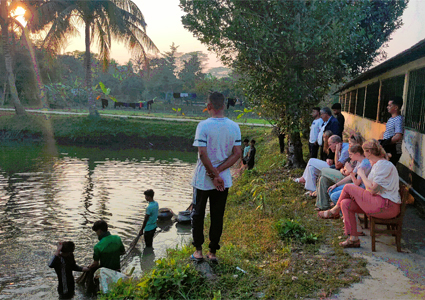
Fish play an important role in the Bangladeshi diet constituting the main and often irreplaceable animal protein source in poor rural households. In this point of view Aloshikha has undertaken a fish cultivation program in its own water bodies with both the high yielding varieties and local indigenous species of fish.
Rice and fish dominate the diet of Bangladeshis to such an extent that the old common proverb “Machee Bhatee Bengali” which can be translated as “Fish and rice make a Bengali perfect” continues to hold true. Fish is an essential and irreplaceable food in the rural Bangladeshi diet. Together with rice, this is eaten at least twice per day with small amount of vegetables and fish make up the typical meal. Bangladesh is dominated by floodplains and rivers, which are rich ecosystems for fresh water fish. The floodplains which comprise over half of the country, are inundated annually during the monsoon which facilitate agriculture and natural fisheries as well. In the monsoon to post monsoon season (June to November) the floodplains provide an ideal habitat for the wide varieties of wild fish species, whereas in the dry season, the land is cultivated with rice. However, the importance of fish as a rich source of animal protein is well established and this is frequently used to justify fish as a valuable food, whereas very little attention has been given to the role of fish in supplying vitamin A and minerals in the diet. Aloshikha has four big ponds, where it cultivates fish both for the purpose of internal dietary supply and generating revenue for the organization.